What the CO-197 denial code means
The CO-197 denial code means the payer expected a prior authorization, precertification, notification or pre-treatment approval for the service and did not find one linked to the claim. The X12 descriptor for claim adjustment reason code (CARC) 197 is: "Precertification/authorization/notification/pre-treatment absent."
Group code CO places the amount on the provider. Under most network contracts, a service performed without a required authorization cannot be billed to the patient. That makes CO-197 one of the more expensive denials to leave unworked.
The word "absent" is important. Sometimes the authorization truly never existed. Just as often it existed but did not reach the claim, did not match the claim, or had expired. The fix depends on which of those happened.
Remark codes seen with CARC 197
Payers choose which remark codes to send, so read every one on the line. Some pairings you may see:
| Code | Meaning | What to check |
|---|---|---|
| N54 | Claim information is inconsistent with pre-certified or authorized services. | Codes, units, dates, rendering provider or location on the claim versus what the authorization approved. |
| N210 | Alert: You may appeal this decision. | An appeal route is open. Check the payer's deadline. |
| CARC 284 or 296 (related) | An authorization number may be valid but does not apply to the billed services (284) or to the provider (296). | Whether the number on the claim belongs to a different service, date range or provider. |
Noridian, a Medicare administrative contractor, lists two common causes for reason code 197 with N210 on Medicare prior authorization programs: the 14-byte unique tracking number (UTN) from the affirmative decision was left off the claim, or a required modifier was missing. Its next step is to resubmit a corrected claim with the UTN, which goes in item 23 on the CMS-1500 or in the 2300 or 2400 loop on an electronic claim.
What triggers a CO-197 denial
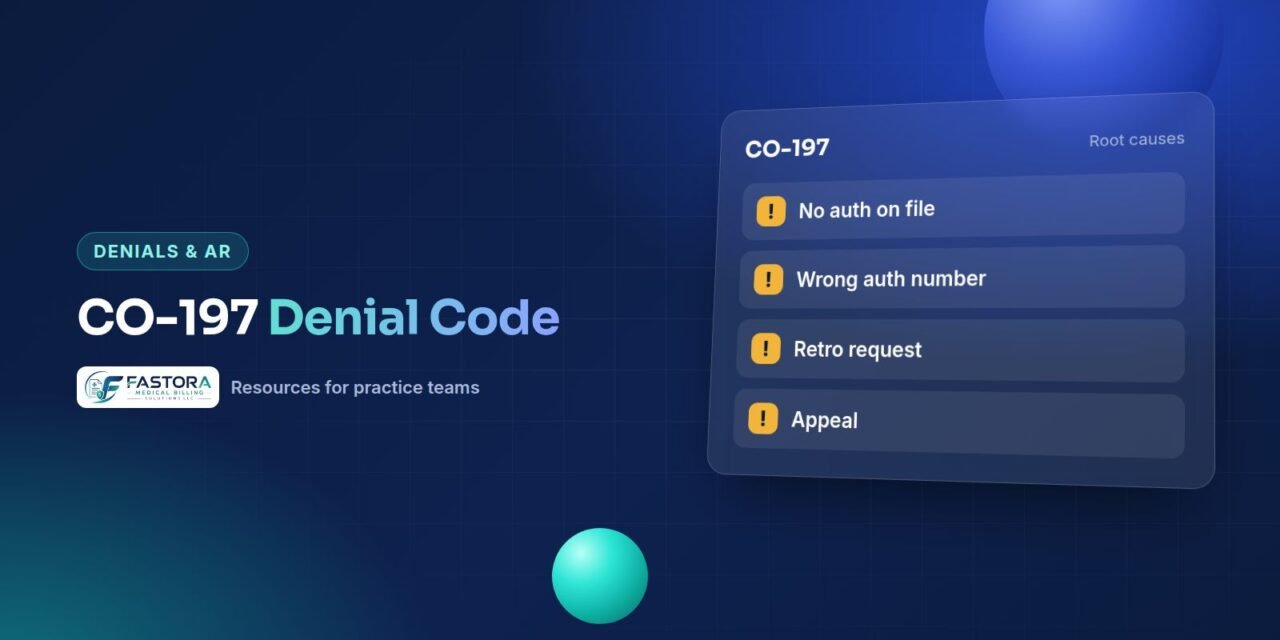
- No authorization requested. The front desk did not know the service required one, often because the payer's list changed or the patient changed plans.
- Authorization not on the claim. The number was obtained but never entered in the authorization field.
- Mismatch. The approved CPT or HCPCS code, units, rendering provider, facility or date range differs from the claim.
- Visits or units exhausted. Therapy, behavioral health and infusion authorizations often approve a set number of sessions. Claims after the last approved visit deny.
- Expired authorization. Care continued past the end date without an extension.
- Wrong entity. The authorization was requested from the health plan when a delegated vendor or behavioral health carve-out manages it, or the reverse.
In behavioral health and therapy practices, the exhausted-visits pattern is especially common because session counts move quickly. Our guide to common psychotherapy claim denials covers that scenario in more detail.
A quick example
A physical therapy clinic receives approval for 12 visits between two dates. The patient attends 14 visits because the plan of care was extended, but nobody requested more visits. Visits 13 and 14 come back as CO-197. The fix is not a corrected claim, because nothing on the claim was wrong. The clinic asks the payer about a late extension request and, if that is refused, decides whether an appeal with progress notes is worth filing.
How to fix a CO-197 denial step by step
- Confirm whether the service required authorization for this patient's plan on this date. Check the payer's current prior authorization list, not an old copy.
- Search your records and the payer portal for any authorization covering the date of service, including ones obtained by the referring provider or the facility.
- If an authorization exists but was not on the claim, send a corrected claim with the authorization or tracking number in the right field.
- If it exists but does not match, find the mismatch. Correct the claim if the claim is wrong. If the service changed during the visit, ask the payer whether it will update the authorization after the fact.
- If no authorization exists, ask the payer whether it accepts retroactive authorization requests for this service. Some payers allow them in limited situations, such as urgent care, eligibility that was retroactive, or a patient who gave the wrong insurance. Policies vary widely.
- If retro authorization is not available and you believe the denial is wrong, file an appeal before the payer's deadline.
- Record the root cause so the same gap does not repeat.
When to appeal and when to correct the claim
Correct the claim when the authorization existed and was valid for the service, but the number, code, units or provider on the claim was wrong or missing. That is a data problem, and most payers expect a corrected claim rather than an appeal.
Appeal when the claim was right and the denial was not, for example:
- The service did not require authorization under the payer's published list on the date of service.
- The service was an emergency, and the plan or applicable law does not allow prior authorization for emergency care.
- The payer's own system failed to link a valid authorization, and a call did not resolve it.
- A retroactive authorization was obtained after the denial.
Attach the authorization approval, call reference numbers, the payer's authorization list for that date and the clinical note. Write a short letter that states which of these situations applies. Our step-by-step guide on how to appeal a denied claim covers the letter format.
Preventing CO-197 denials
Authorization denials are best stopped at scheduling. The work happens days before the visit, not after the remittance.
- Check authorization requirements during insurance verification for every new patient, new plan year and new service.
- Keep a current list of services that require authorization for your top payers, with the source document and the date you last checked it.
- Track every authorization with its approved codes, units, provider, location and dates, and alert staff when a patient is close to the last approved visit or the end date.
- Request extensions before the authorization runs out, with progress notes ready.
- Make the authorization number a required field before a claim can be released.
- For Texas practices, check whether a provider holds a prior authorization exemption under the state's gold card law. Our Texas gold card guide explains how it works.
Help with authorization denials
Fastora's teams handle prior authorization tracking up front and work CO-197 denials on the back end, with certified billing professionals deciding between correction, retro authorization and appeal. See our denial management service, the full denial codes list, or request a free claims audit.
For the full prior-authorization denial workflow — how to read the denial, when retro authorization is possible, and how to appeal — see our prior authorization denials guide.
Checklist
Frequently asked questions
Can I bill the patient after a CO-197 denial?
Usually not. The CO group code means the amount is the provider's responsibility under the contract. Most network agreements bar billing the member when the provider did not obtain a required authorization. Check your contract before contacting the patient.
Can I get a retroactive authorization?
Some payers allow it in limited cases, such as emergencies, retroactive eligibility or wrong insurance information at the visit. Each payer sets its own rules and deadlines, so check the provider manual or call the utilization management line.
What if the authorization was approved but the claim still denied CO-197?
Compare the claim with the approval: codes, units, rendering provider, facility and date range. Correct any mismatch on a corrected claim. If everything matches, call the payer and appeal if the system did not link the authorization.
Does Original Medicare require prior authorization?
Only for specific programs and services that CMS designates. When a Medicare prior authorization program applies, the claim must carry the unique tracking number from the affirmed decision, and missing it can trigger reason code 197.