Good faith estimate requirements under the No Surprises Act
A good faith estimate for therapists is a written estimate of expected charges that must be given to uninsured and self-pay clients before care. The No Surprises Act good faith estimate rules are set out in federal regulations at 45 CFR 149.610 and explained on the CMS No Surprises website.
The rule applies to health care providers broadly, which includes psychologists, counselors, social workers, marriage and family therapists and other licensed mental health clinicians. Private-pay practices are often affected more than others, because a large share of their clients pay out of pocket. For the insurance side of therapy billing, see the behavioral health billing guide.
*This article is general information, not legal advice. Check the current CMS guidance and your state's rules, and consult a qualified advisor about your practice's obligations.*
Who must receive a good faith estimate for therapists' services
The estimate is required for two groups of clients:
- Uninsured individuals: clients with no health coverage.
- Self-pay individuals: clients who have coverage but do not plan to submit the claim to their plan, for example because the therapist is out of network or the client prefers privacy.
Providers must also tell clients that estimates are available. Federal rules require this notice in writing, prominently displayed on the practice's website and in the office, and orally when a client schedules or asks about cost. Asking about coverage status at scheduling is the simplest way to identify who needs an estimate.
Timing: when to send the estimate
The deadline depends on how far in advance the service is scheduled, or whether the client simply asks about cost.
| Situation | Deadline to provide the estimate |
|---|---|
| Service scheduled at least 3 business days in advance | Within 1 business day of scheduling |
| Service scheduled at least 10 business days in advance | Within 3 business days of scheduling |
| Client requests an estimate without scheduling | Within 3 business days of the request |
When an appointment is booked fewer than 3 business days ahead, the scheduling-based deadlines do not apply, although a client can still request an estimate. Many practices simply issue the estimate at intake for every uninsured or self-pay client, which avoids tracking the business-day rules visit by visit.
What the estimate must include
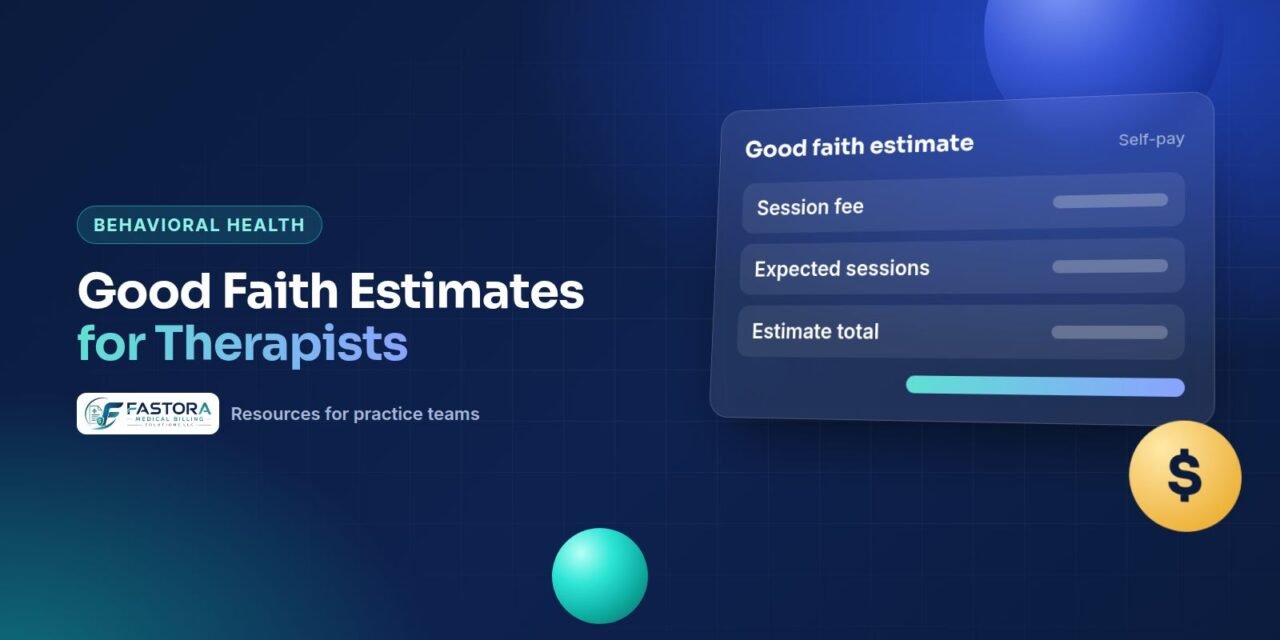
The estimate must be written in clear, understandable language and provided on paper or electronically, based on the client's preference. It generally must include:
- The client's name and date of birth.
- A description of the primary service in clear language, and the date if it is scheduled.
- An itemized list of the services reasonably expected to be provided, grouped by provider or facility.
- Applicable diagnosis codes, expected service codes and expected charges for each item.
- The name, NPI, tax identification number and location of each provider or facility listed.
- A list of any services the provider expects will need separate scheduling, with a note that separate estimates will be provided.
- A statement that the estimate is not a contract and does not require the client to obtain the services.
- A statement that actual charges may differ, and that the client can dispute a bill that is substantially higher than the estimate.
- Information about the patient-provider dispute resolution process and where to learn more.
CMS publishes sample good faith estimate forms that practices can adapt. The estimate becomes part of the client's record, and federal rules require a copy to be available to the client on request for six years.
Recurring services such as ongoing therapy
Weekly or biweekly therapy is a recurring service. Federal rules allow one estimate to cover recurring items or services for up to 12 months, as long as it clearly states the expected number of sessions and their scope.
A simple example
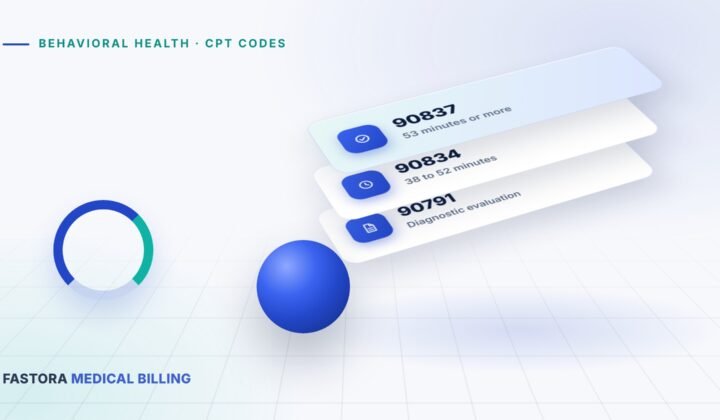
A client starts weekly individual psychotherapy with an intake session. The estimate might list one diagnostic evaluation (90791) at your self-pay rate and an expected number of 45-minute psychotherapy sessions (90834) over the coming months at your per-session rate, along with the diagnosis code you expect to use and a total expected charge.
- If care is expected to continue past 12 months, issue a new estimate for the next period.
- If the plan of care changes significantly, such as adding family sessions or moving from biweekly to weekly, issue an updated estimate.
- If your self-pay rate changes, update active estimates before the new rate applies.
- Estimate a realistic number of sessions. Overestimating is safer than underestimating, but the estimate should still reflect your honest expectation.
Patient-provider dispute resolution
If an uninsured or self-pay client receives a bill that is at least $400 more than the expected charges on the estimate for any one provider or facility, they may start the patient-provider dispute resolution process through CMS. According to CMS consumer guidance, the client must start the process within 120 calendar days of the date on the initial bill and pay a $25 administrative fee.
While a dispute is pending, the provider may not move the bill into collections or threaten to do so, must pause collections already underway, cannot charge late fees on the disputed amount, and cannot retaliate against the client. An independent dispute resolution entity reviews the case and decides what the client owes.
The best protection is an accurate, up-to-date estimate and a billing process that flags any statement that would exceed the estimate by a meaningful amount before it goes out.
Common mistakes to avoid
Most estimate problems come from treating the form as a one-time intake document. The mistakes below are the ones that most often leave a practice exposed to a dispute or a compliance gap.
- Only offering estimates on request. The notice must be displayed and given orally at scheduling, and estimates must be sent to uninsured and self-pay clients within the deadlines, whether or not they ask.
- Listing one session when care is ongoing. If you expect weekly therapy, the estimate should reflect the expected number of sessions, not just the first visit.
- Forgetting other services. Family sessions, group therapy or testing that you expect to provide should appear on the estimate or be flagged as separately scheduled.
- Using the wrong rate. If you offer a sliding scale or a reduced self-pay rate, the estimate should show the rate the client will actually be charged.
- Letting estimates expire. Estimates for recurring care cover up to 12 months, so ongoing clients need a fresh estimate each year.
- Missing identifiers. Each clinician's name, NPI and the practice's tax ID and location are required; a group practice should list the clinician who will provide care.
- Not keeping copies. The estimate is part of the record and must be available to the client on request.
A short quarterly review of a sample of self-pay charts is an easy way to catch these gaps before a client raises them.
Insured clients and out-of-network care
Clients who use their insurance, including out-of-network benefits submitted through the plan, are handled differently from self-pay clients under the federal estimate rules. The client-facing estimate described in this article is triggered by uninsured or self-pay status, so the key question at scheduling is whether the client intends to submit claims to their plan.
When a client changes their mind and decides to pay directly, treat them as self-pay from that point and issue an estimate. Document the client's choice in the record so the practice can show why an estimate was or was not provided.
Building the estimate into your workflow
- Ask about insurance status and whether the client plans to use coverage when they first schedule.
- Post the required notice about estimates on your website, in the office and in your intake scripts.
- Create an estimate template with your self-pay rates, NPI, tax ID and required disclaimers.
- Issue the estimate within the required deadline and store a copy in the client's record.
- Set a reminder to review each active estimate before the 12-month period ends or when care changes.
- Compare each statement with the estimate before sending, and resolve differences with the client early.
Clear self-pay rates and consistent statements make estimates easier to prepare and reduce disputes. Estimates are also a natural moment to discuss payment options, such as paying at each session or setting up a payment plan.
How Fastora supports self-pay billing
Fastora supports therapy practices with patient statements, self-pay balances and payment plans alongside insurance billing. Learn more about our work with therapists and counselors and our patient statement and collections service, or request a free claims audit of your current billing workflow.
What is a good faith estimate for therapy?
A good faith estimate for therapy is the written cost estimate self-pay and uninsured clients must receive under the No Surprises Act before their first session. It lists expected charges by CPT code, diagnosis, and the total estimated cost for the treatment period — typically 12 months for ongoing therapy.
Which good faith estimate services does the No Surprises Act cover?
Good faith estimate requirements apply to scheduled or requested services for self-pay patients, including therapy sessions, psychological testing, and intensive outpatient programs. If the final bill exceeds the estimate by $400 or more, the patient can trigger the patient-provider dispute resolution process — so estimates need to be realistic, not optimistic.
For the full compliance picture — including IDR timelines and the $400 threshold — see our No Surprises Act billing compliance guide.
Checklist
Frequently asked questions
Do I need a good faith estimate for clients who use their insurance?
The federal estimate requirement discussed here applies to uninsured clients and to insured clients who choose not to use their coverage. Clients billing their plan are covered by separate rules.
Can one estimate cover a year of weekly therapy?
Yes. Federal rules allow a single estimate for recurring services for up to 12 months, if it states the expected number and scope of sessions. Issue a new estimate for any period beyond that or when care changes significantly.
What happens if my bill is higher than the estimate?
If the bill is at least $400 more than the estimate, the client can start patient-provider dispute resolution within 120 days of the initial bill. Collections must pause while the dispute is pending.
Does the estimate have to include a diagnosis code?
The rules call for applicable diagnosis codes along with expected service codes and charges. Use the diagnosis you reasonably expect based on the information available.