
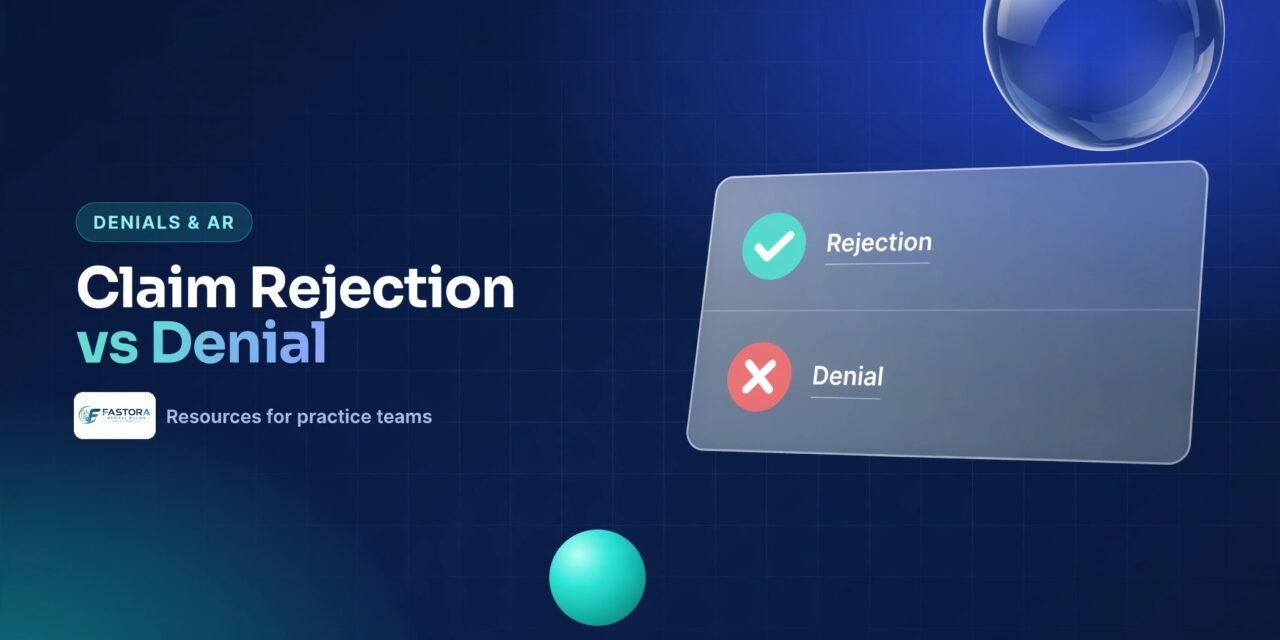
The difference between a rejection and a denial
A rejection happens before adjudication, usually at the clearinghouse or the payer's front door, when a claim fails format or eligibility edits. The payer never processed it, so there is no appeal right; you fix the data and resubmit as a new claim.
A denial is a processed claim the payer refused to pay, reported with reason codes on the remittance. Denials are corrected, or appealed with records, under the payer's deadline. Our hub on claim denial codes (CARC and RARC) explains the codes themselves.
Common causes of each
Rejections usually trace to eligibility, demographics, invalid code combinations or missing required fields, which is why eligibility verification and pre-submission review prevent most of them. Denials more often involve authorization, medical-necessity documentation, bundling or timely filing.
The workflow difference matters: a resubmitted rejection keeps its original timely-filing position only if you act quickly, while a denied claim follows the corrected-claim and appeal routes in corrected claim vs appeal.
What to do next, by outcome
For a rejection: read the clearinghouse report the same day, fix the field, and resubmit. Track rejection reasons weekly; a repeating reason is a charge-entry or intake problem, not bad luck.
For a denial: read the reason code, decide correct-or-appeal, and calendar the deadline from timely filing limits. Practices that want this worked for them use denial management services, and the prevention habits are covered in how to reduce claim denials.
Frequently asked questions
Does a rejected claim affect timely filing?
It can. Most payers count filing from the original submission only when the corrected claim is resubmitted promptly and you can prove the first attempt. Resubmit rejections within days, not weeks.
Can I appeal a rejected claim?
No. A rejected claim was never adjudicated, so there is nothing to appeal. Correct the data and resubmit it as a new claim.
2 comments